Political Playback:
California Capitol News You Might Have Missed
Bo Tefu | California Black Media
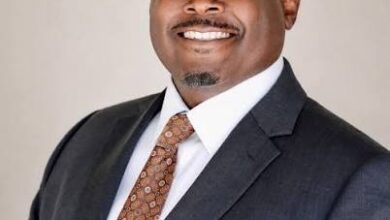
New Protections for Ticket Buyers: Gov. Newsom Signs Assemblymember Isaac Bryan’s Bill
Gov. Gavin Newsom signed a bill on Sept. 27 authored by Assemblymember Isaac Bryan (D-Ladera Heights). The legislation strengthens consumer protections for Californians purchasing tickets to concerts, sporting events and other live entertainment.
Assembly Bill 1349 expands state regulation of original ticket sellers, resellers and online resale marketplaces. The law targets deceptive sales practices, ticket-buying software and speculative listings — tickets advertised for sale by sellers who do not possess them or have authorization to sell them.
“Buying a ticket shouldn’t come with hidden risks or unfair practices,” Newsom wrote on social media after signing the measure.
Under AB 1349, ticket sellers are prohibited from listing tickets before they have been officially released unless they have authorization or a legally enforceable right to receive them. Online marketplaces must also take reasonable steps to prevent speculative ticket sales on their platforms.
The law prohibits sellers from using bots, multiple accounts, email addresses or internet protocol addresses to circumvent ticket limits, presale restrictions, electronic queues and other controls. It also bans websites and advertisements designed to mislead buyers into believing they are purchasing tickets from an authorized seller, venue or event organizer.
Sellers who violate certain provisions and fail to provide a promised ticket may be held liable for twice the ticket’s contracted price. Buyers may also recover nonrefundable expenses incurred while attempting to attend an event, along with reasonable attorney’s fees and court costs.
Pastor Tecoy Porter Sr., president of the National Action Network’s Sacramento chapter, said the law establishes needed accountability.
“Buying a ticket to a concert or show shouldn’t mean entering a marketplace where the rules are stacked against you. This year, we worked with a coalition of consumers, civil rights advocates, community groups, and businesses to make AB 1349 stronger. Consumers deserve enforceable rules that protect them. We thank Assemblymember Bryan for his leadership, and we will keep working to make ticketing fair for every Californian.”
Jose L. Barrera, national vice president for the Far West Region of the League of United Latin American Citizens, also praised the measure.
“Californian families deserve certain protections when they buy tickets. Assemblymember Bryan listened to communities across California and delivered a bill that puts fans first. We thank him and Governor Newsom for making it law.”
Sen. Weber Pierson Hosts San Diego Conversation on Black Women’s Health
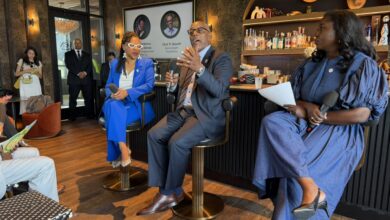
State Sen. Akilah Weber Pierson (D-San Diego) brought health care providers and community members together Sept. 21 for a conversation about menopause and the disproportionate chronic disease risks facing Black women.
Weber Pierson, a board-certified OB/GYN and chair of the California Senate Health Committee, co-hosted the event with the Partnership to Fight Chronic Disease (PFCD) at the Southeastern Live Well Center in San Diego. The discussion focused on the experiences of Black women during perimenopause and menopause, including differences in symptoms, diagnosis, treatment, and access to culturally responsive care.
The event, titled “Thriving Through the Change: Menopause, Chronic Disease Risk, and Black Women’s Health,” examined how menopause can intersect with conditions including hypertension, cardiovascular disease, diabetes, and osteoporosis. Speakers also discussed how disrupted sleep, mood changes, and changes in body composition can affect disease prevention and management during midlife.
The conversation highlighted calls for earlier screening, coordinated care, informed treatment decisions, and research that better reflects the experiences of Black women.
“Black women deserve to have their menopause symptoms heard, understood, and treated with the same urgency afforded to every patient,” Weber Pierson said. “By centering Black women’s lived experiences and recognizing how menopause can interact with chronic conditions, we can advance policies and care models that support healthier lives through midlife and beyond.”
PFCD Chair Ken Thorpe said menopause has been overlooked in research, clinical discussions, and public policy, adding that the organization wants to connect menopause care with chronic disease prevention and management.
The event also featured physicians Latisa S. Carson and Shereen Binno, who discussed the importance of competent, compassionate care and ensuring Black women are included in broader conversations about women’s health in midlife.
Weber Pierson, a Democrat representing the 39th Senate District, has made health care access and health disparities part of her legislative work. She also chairs the California Legislative Black Caucus (CLBC) and the Senate Select Committee on Social Determinants of Health.
The Sept. 21 event was promoted as an opportunity for Black women to better understand the menopausal transition, chronic disease risks, and ways to advocate for their health.
Court Orders Consumer Protection Agency Funded, Handing Bonta-Led Coalition a Win
A federal judge has ordered the acting director of the Consumer Financial Protection Bureau to request funding from the Federal Reserve, handing California Attorney General Rob Bonta and a coalition of 22 attorneys general a major victory in their lawsuit to keep the consumer watchdog operating.
The U.S. District Court for the District of Oregon ruled that former acting CFPB Director Russell Vought’s refusal to seek funding for the agency was unlawful and violated the U.S. Constitution’s separation of powers.
The order requires current acting Director Mark Paoletta to request the money necessary for the bureau to perform its congressionally mandated duties. Paoletta became acting director Aug. 1.
The ruling largely resolves the lawsuit Bonta and the multistate coalition filed in December 2025, although the decision may be appealed.
“Today, we celebrate a giant win for consumers,” Bonta said. “A court has declared that the federal government’s attempt to refuse to fund the CFPB — the agency responsible for protecting consumers from unfair, deceptive, and abusive acts by Big Corporations — is an illegal, unconstitutional, and partisan attempt to starve the CFPB of lawful funding.”
Congress created the CFPB in response to the 2008 financial crisis. The agency regulates consumer financial products and investigates complaints involving banks, lenders, debt collectors and credit-reporting companies. It also works with state attorneys general and banking regulators on consumer-protection enforcement.
In November 2025, the CFPB announced that it would not request additional money from the Federal Reserve. The decision relied on a U.S. Department of Justice analysis asserting that the bureau could not legally draw funds while the Federal Reserve was operating at a loss.
The attorneys general argued that the funding cutoff would prevent the CFPB from carrying out legally required responsibilities, including maintaining its consumer complaint database.
The Trump administration had also suspended work across the agency, dismissed probationary employees and attempted to send layoff notices to 90% of its workforce. Courts blocked the planned mass layoffs.
Bonta said the latest ruling ensures the agency can continue protecting consumers, particularly as families contend with rising costs.
Critics and Advocates Slam Newsom for Vetoing Abortion Bill
Gov. Gavin Newsom is facing criticism from reproductive rights advocates over his veto of legislation that would have barred California from extraditing people to other states for criminal prosecution over legally protected abortion and gender-affirming care.
Newsom vetoed Assembly Bill (AB) 2164, also known as the Care Without Fear Act, on Sept. 20. The bill, authored by Assemblymember Rebecca Bauer-Kahan (D-Orinda), would have strengthened California’s shield laws by prohibiting extradition involving providers, patients, and others accused of offenses related to legally protected care. The governor listed AB 2164 among the bills he vetoed in his Sept. 20 legislative update.
Reproductive Freedom for All, which supported the legislation, called the veto a missed opportunity to provide longer-term protections for abortion providers.
“California cannot call itself a safe haven for reproductive freedom while leaving abortion providers just one election away from extradition,” said Pavitra Abraham, the organization’s director of state campaigns.
The group’s president and CEO, Mini Timmaraju, also criticized the decision, saying California should protect providers from being sent to other states to face criminal charges for care that is legal in California.
Newsom has defended California’s existing shield laws but argued that decisions involving extradition should remain within the governor’s executive authority rather than be dictated by the Legislature.
In his veto message, Newsom said he was “troubled by the precedent” of an outgoing administration and Legislature limiting the authority of a future governor based on their shared policy preferences.
The dispute follows a January case involving a California doctor whom Louisiana authorities sought to extradite over allegations related to the provision of abortion medication. Newsom rejected the request and said California would not allow other states to punish doctors for providing reproductive health care.
Supporters of AB 2164 argued that the protections should be written into state law because executive orders can be changed or revoked by future governors. Amanda Barrow, a senior staff attorney at the UCLA Law Center on Reproductive Health, Law, and Policy, said legislative protections can provide greater stability when executive leadership changes.
The veto leaves California’s existing shield-law protections in place but rejects the additional limits on gubernatorial extradition authority proposed by AB 2164.
The measure was among several reproductive health bills still awaiting action from Newsom this legislative session, according to Reproductive Freedom for All, including proposals concerning medication abortion access at community colleges and expanding who can provide abortion care.
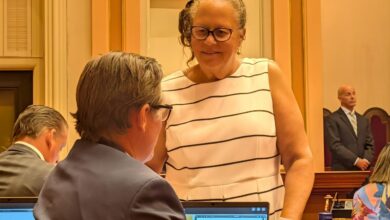
Sec. of State Weber, State Controller Malia Cohen, and Others to Appear at Political Town Hall on Oct. 3
California State Controller Malia Cohen is scheduled to appear at a political town hall and ballot forum in Los Angeles on Oct. 3, joining other prominent Black California political leaders for a discussion about issues facing voters ahead of the November election.
The event, “California Voices: A Political Town Hall & Ballot Forum,” will feature Cohen, Los Angeles Mayor Karen Bass, California Secretary of State Shirley Weber, and Los Angeles City Attorney candidate John McKinney.
The lineup brings together Black leaders from state and local government and a candidate for elected office. Cohen serves as California’s state controller, Weber is the state’s secretary of state, Bass is the mayor of Los Angeles, and McKinney is running for Los Angeles city attorney.
Cohen announced her participation in a social media post, describing the forum as an opportunity to discuss issues affecting Californians and the stakes of the upcoming election.
“I’ll be joining California Voices: A Political Town Hall & Ballot Forum for an important conversation about the issues facing Californians and what’s at stake this election season,” Cohen said.
Cohen is scheduled to appear on stage at 11:40 a.m. at SEED LA School. The event is being hosted by KBLA Talk 1580 and the Community Voter Education Project and is free to attend.
Bass, Weber, and McKinney each bring different perspectives to the forum. Bass has served as Los Angeles mayor since 2022 after previously serving in Congress and as speaker of the California Assembly. Weber, a former state legislator, became California secretary of state in 2021 and is responsible for overseeing elections statewide. McKinney is seeking the Los Angeles city attorney position.
The forum comes about a month before the Nov. 3 general election, when California voters will consider statewide and local races, along with ballot measures covering issues including housing, taxes, campaign finance, and elections.
The event is part of an effort to provide voters with an opportunity to hear from political leaders and discuss issues affecting California communities ahead of the election.
Attorney Gen. Bonta Applauds State High Court Decision on Sheriff’s Ballot Seizures
California Attorney General Rob Bonta on Sept. 24, applauded the California Supreme Court rulings affirming his authority to supervise county sheriffs and requiring Riverside County Sheriff Chad Bianco to comply with his directives following the seizure of hundreds of thousands of voted ballots.
The rulings in two companion cases, Bonta v. Bianco and Cervantes v. Bianco, stem from Bianco’s criminal investigation into the November 2025 special election in Riverside County.
In February, Bianco obtained search warrants to seize election materials as part of the investigation. Bonta subsequently directed the sheriff to pause the investigation, preserve evidence, and provide information to his office for review. According to Bonta’s office, Bianco continued the investigation and seized roughly 650,000 voted ballots from the Riverside County Registrar of Voters.
In Bonta v. Bianco, the Supreme Court affirmed the attorney general’s broad constitutional and statutory authority to supervise county sheriffs and ordered Bianco to comply with Bonta’s directives.
“Today’s rulings bring important clarity for our constitutional system in California,” Bonta said. “I’m grateful that our State Supreme Court reaffirmed my authority as Attorney General to supervise county sheriffs.”
In Cervantes v. Bianco, Riverside voters challenged the seizure of the ballots. The Supreme Court reaffirmed that voted ballots must remain in the custody of elections officials, including during a criminal investigation, to protect them from alteration, tampering or improper interference.
Bonta said the decision establishes that election fraud investigations can proceed without allowing criminal investigative tools to interfere with election administration.
“Election fraud can and should be investigated,” Bonta said. “But misuse of criminal investigative tools — without any evidence that a crime was committed — needlessly undermines trust in our elections system and in law enforcement.”
The attorney general’s office said Bianco has not provided evidence of criminal misconduct in the 2025 election.
The rulings also come after Gov. Gavin Newsom signed Senate Bill 1418 on Sept. 19. The urgency law expands protections under Elections Code Section 15551 to cover not only voted ballots but other election-related materials and equipment. The law took effect immediately upon signing.
In a letter to the Supreme Court, Bonta said the expanded law could potentially apply to other materials seized by Bianco. He suggested the court could limit its ruling in Cervantes to ordering the return of the ballots while his office uses its supervisory authority to address other seized materials.
Bonta encouraged Californians to vote early in the Nov. 3 midterm election, saying the rulings provide greater protection for the custody of voted ballots.
Oakland Is Considering Bringing an HBCU to the Bay Area
Oakland leaders are exploring plans to bring a historically Black college or university to the city, an initiative supporters say could expand educational opportunities and strengthen the Bay Area’s Black community.
The Oakland HBCU initiative, launched last year as a fiscally sponsored project of the Oakland Fund, remains in the early planning stages. A volunteer task force that includes Mayor Barbara Lee and representatives from the business, higher education, civic and philanthropic sectors is leading the effort, according to The Oaklandside.
The task force commissioned a feasibility study to examine the potential economic impact of an HBCU campus and identify industries positioned for growth in Oakland. The study has identified technology, artificial intelligence, entrepreneurship, life sciences, transportation and logistics as possible areas of academic focus.
Kim Thompson, a task force member, said creating an HBCU presence in Oakland could help California retain students who leave the state to attend historically Black institutions elsewhere.
“That’s a big brain drain and loss of students who could be staying here and gaining access to high-wage STEM careers that the Bay Area has to offer,” Thompson told The Oaklandside. “There’s a lot of students we think could benefit from the culturally affirming education that an HBCU could provide.”
Options under consideration include establishing a satellite campus for one institution, creating a hub where several HBCUs could offer classes or partnering with the Peralta Community College District to provide a pathway to a four-year HBCU degree.
The group has toured the former Holy Names University campus and potential downtown Oakland locations. Howard University previously expressed interest and conducted a site visit, Thompson said, although leadership changes at the Washington-based university have slowed discussions.
Lee said an HBCU could also help stabilize Oakland’s shrinking Black population.
“Here in Oakland, gentrification, redlining and systemic discrimination has been a driver of bringing our population down,” Lee told The Oaklandside. “This would give some stability in many ways to the Black population and for everyone in Oakland to see that we still care about the Black community and Black students.”
The task force is expected to release its feasibility study before moving forward with prospective schools and possible locations.