Gov. Newsom signs bills impacting Blacks
Gov. Newsom Signed These Black Caucus Members’ Bills Focused on Ballot Counting, Drones and Public Health
Antonio Ray Harvey | California Black Media
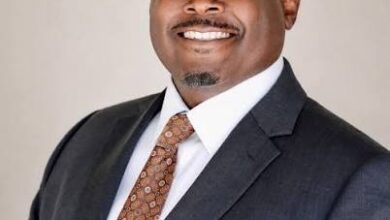
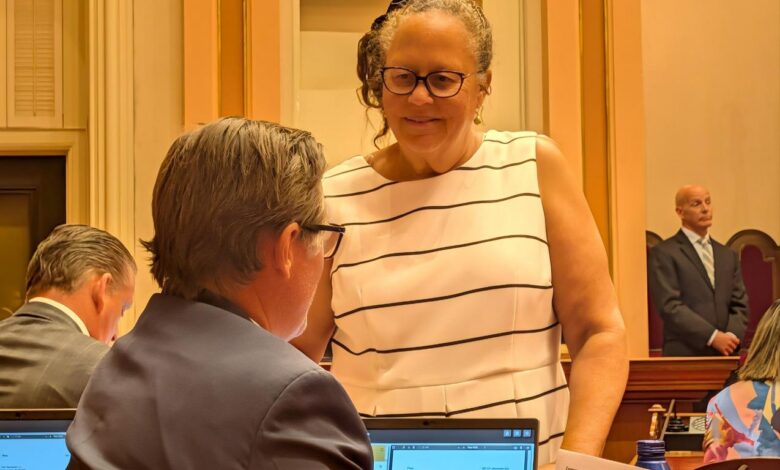
Gov. Gavin Newsom has signed legislation authored by Sen. Laura Richardson (D-Inglewood) that establishes uniform procedures for handling vote-by-mail ballots cast in person without identification envelopes.
Newsom signed Senate Bill (SB) 1420 on Sept. 19 as part of a broader election-protection package. Richardson introduced the measure after her closely contested 2024 state Senate race took more than three weeks to resolve, causing her to miss several days of Senate orientation.
Richardson won the race by 2,718 votes, a margin of about 1.1 percentage points.
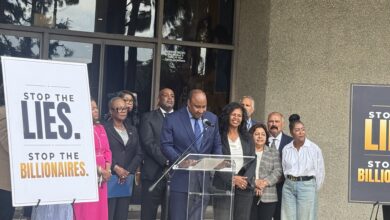
“In my particular election, it took three weeks after the polls closed for my election to the state Senate to be confirmed,” said Richardson, a member of the California Legislative Black Caucus (CLBC). “During that time, I was left with questions and problems I could neither answer nor solve. It’s important that we can call our elections more quickly and, of course, accurately.”
SB 1420 requires the Secretary of State to establish uniform procedures that county election officials must follow when voters cast vote-by-mail ballots in person without the ballots’ identification envelopes. The bill also requires those procedures to be posted on the Secretary of State’s website.
Those procedures must address how election workers check in voters, verify that each voter has the correct ballot, protect ballot secrecy and ensure that no voter submits more than one ballot without an identification envelope. The Secretary of State must consult county registrars and other election stakeholders while developing the regulations.
The law also requires the state voter information guide and election outreach materials to explain vote-by-mail and early-voting procedures.
“The accuracy of our elections is second to none across the nation,” Richardson said. “This bill is simply a way to improve the speed and, for those who do vote by mail, have it done in a faster way.”
Because SB 1420 contained an urgency clause, it took effect immediately after Newsom signed it and Secretary of State Shirley N. Weber’s office chaptered it. The provision allows election officials to implement the requirements before the Nov. 3 general election.
Newsom has also signed other priority measures carried by members of the CLBC.
On Sept. 14, he signed Assembly Bill (AB) 2161, authored by Assemblymember Mia Bonta (D-Oakland). The law is intended to help eligible Californians retain Medi-Cal coverage as the state implements new federal work and community-engagement requirements.
Beginning no sooner than Jan. 1, 2027, certain Medi-Cal beneficiaries ages 19 to 64 will generally be required to document at least 80 hours per month of work, community service or participation in a work program. Or they will be required to enroll at least half time in an educational program to maintain coverage.
AB 2161 requires counties to verify information through available data when possible, maintain coverage during specified verification periods and check whether applicants or beneficiaries qualify for Medi-Cal on another basis before denying or terminating coverage. It also requires counties to resolve conflicting information with beneficiaries before taking adverse action.
“AB 2161 ensures California does not extend these requirements beyond federal law, prevents them from applying to state-funded populations, and improves how eligibility is processed and communicated, helping eligible individuals and families stay covered,” Bonta said.
Newsom also signed AB 2339 by Assemblymember Mike A. Gipson (D-Carson) on Sept. 26. Known as the Accuracy in Mental Health Reporting Act, the law strengthens reporting requirements involving people who are prohibited from possessing firearms because of involuntary mental health treatment or specified court findings.
Among other provisions, the law clarifies which facilities are responsible for submitting reports to the California Department of Justice and requires supporting records to accompany certain reports. It also strengthens confidentiality protections governing the information.
Candace Chung, a deputy attorney general who appeared on behalf of Attorney General Rob Bonta before the Senate Public Safety Committee in June, said about 219,000 firearm-prohibiting mental health holds are reported to the department each year.
“This bill will improve accuracy and consistency in reporting,” Chung said. “It clarifies what information needs to be reported, who’s responsible for reporting it, and creates additional safeguards against errors by requiring supporting documentation.”