Engineering the intelligence-defined vehicle for everyone
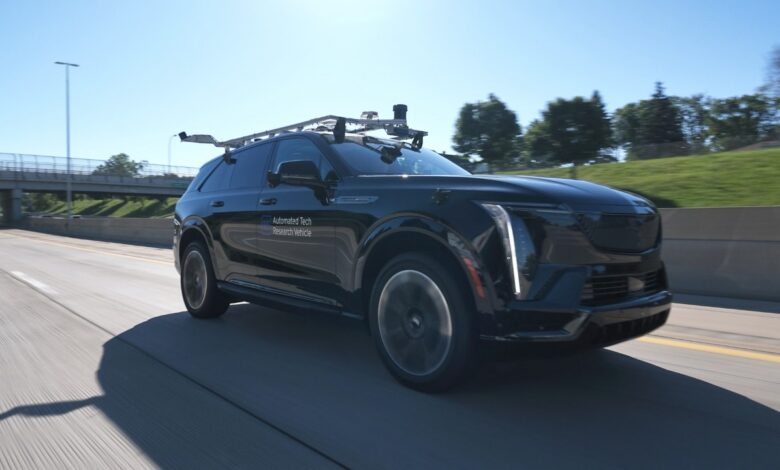
One of GM’s automated research vehicles tests autonomous-driving technology.
Editor’s note: Below is an edited transcript of the mainstage remarks at GM Forward 2026, adapted to include more of what was announced on stage.
At General Motors, intelligence is driving a fundamental transformation of our vehicles, reshaping not only what they can do, but how we build them. We are doing this at scale, for a wide range of customers, while making premium experiences more accessible to everyone.
Underpinning these efforts is a deeply integrated AI strategy. By combining shared compute platforms, proprietary data pipelines, and specialized models, our goal is to bring better, safer, and more capable products to our customers faster than before.
At GM’s scale, this work compounds across millions of vehicles and a global network of manufacturing facilities.
Enterprise AI that halves development times
GM is working to significantly reduce the traditional four-to-five-year vehicle development timeline, with a goal of cutting it in half. Through advancements in enterprise AI and virtualization, the company is developing a new operating approach for vehicle development.
By bringing together design, engineering, and manufacturing from day one on a unified digital thread, we can move from sketch to production with unprecedented speed and efficiency. This concurrent engineering model allows us to innovate faster, improve continuously, and scale new technologies across our lineup with incredible agility.
For example, with lithium manganese rich battery chemistry, or LMR, we tested more than 300,000 battery designs virtually before building a single physical prototype, enabling the team to move from its first LMR battery pack concept to formal program approval in just one month.
Virtual testing of the fourth-generation EV’s LMR battery.
Generation 4 EV platform: Mainstreaming electric vehicles
That product development operating system is already shaping our fourth-generation EV platform and reaffirming GM’s commitment to an electric future. Built to bring electric mobility to mainstream buyers at scale, this platform is the ultimate culmination of our progress and brings together the absolute best of our technology in one unified platform.
Key innovations include:
- Breakthrough chemistry: We are utilizing LMR battery chemistry to deliver an exceptional range-to-cost ratio, improved performance, and enhanced durability.
- Redesigned drive units: Our new propulsion systems utilize more compact motors and power electronics that reduce parts count by 40 percent compared to today, freeing space for people and things and cutting mass.
- Centralized computing: A new compute and electrical architecture serves as the vehicle’s foundation, enabling smarter energy management, seamless software updates, and richer in-cabin experiences.
Centralized compute that powers AI and autonomy
While AI accelerates how our vehicles are designed and developed, GM’s next-generation electrical and compute architecture redefines what they can do.
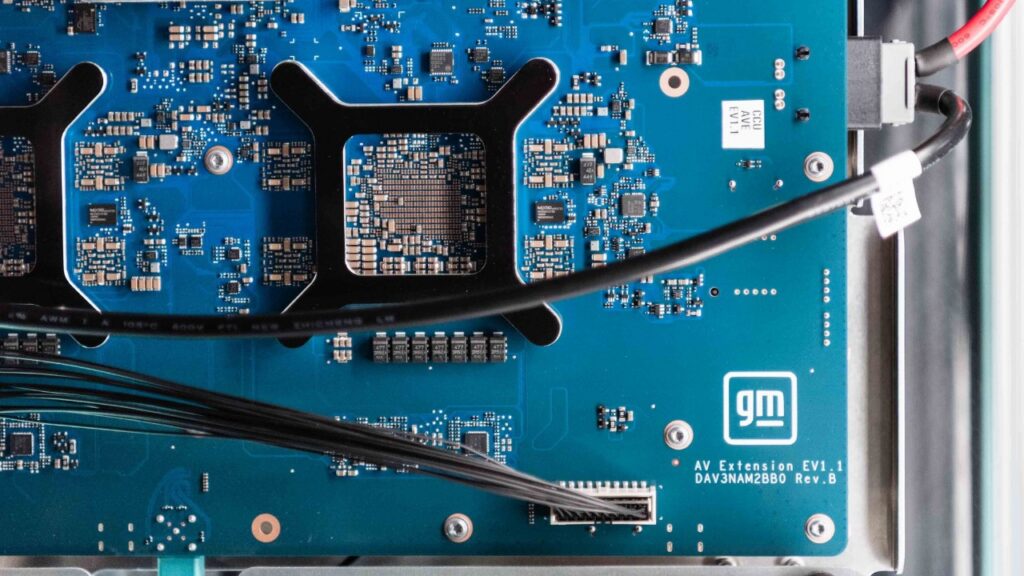
By decoupling software from physical hardware, the new architecture consolidates components like perception, propulsion, active safety, and chassis controls onto a single, high-speed Central Compute Unit (CCU). This unified foundation provides the heavy computing power required to run both sophisticated in-cabin AI and autonomous driving simultaneously.
This propulsion-agnostic architecture delivers 40x more computing power with 30% less wiring length and mass, plus up to 50% faster cellular connectivity than our previous systems, for smoother streaming, quicker downloads and more responsive connected services.
An inside look at GM’s in-house-designed Central Compute Unit (CCU).
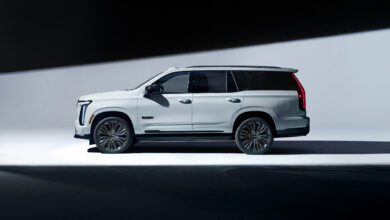
Following its 2028 debut on the Cadillac ESCALADE IQ, we’ll quickly roll out this platform across our highest-volume gas-powered full-size SUVs and trucks, our three-row crossovers and our fourth-generation electric vehicles. This means that everything from the Cadillac ESCALADE IQ to the Chevy Silverado will get an electrical and computing architecture to power the intelligence and autonomy features we’re creating, with massive headroom for future growth. The breadth and scale of this rollout makes it one of the industry’s largest multi-segment introductions of software-defined vehicles.
OnStar Connected Intelligence: Built to anticipate, adapt, and assist
As OnStar celebrates its 30th anniversary, we’re transforming it into a multimodal intelligence platform—one that lives in the vehicle and across our vehicle apps for retail and fleet customers.
Today, OnStar connects more than 12 million subscribers across 22 markets. OnStar advisors handle more than 20 million calls in North America each year, helping customers through emergencies and everyday moments.
In the coming months, we will launch the OnStar AI Assistant in the 2027 Cadillac LYRIQ through an over-the-air update, with more GM vehicles to follow. Trained on GM’s extensive vehicle knowledge, it offers timely, personalized guidance to help drivers get more from their vehicles. This deeply integrated intelligence will be complemented by trusted human support, creating an experience no other automaker can match.
Starting in 2027, the intelligence that powers GM vehicles will extend to your phone with the new OnStar mobile app. This app will replace the current OnStar Guardian and Buick, Cadillac, Chevrolet, and GMC vehicle brand apps, delivering a unified experience across vehicles and devices. It will combine vehicle management with connected camera features such as crash and safety recordings and live view, new connected family and proactive safety features, continuing to evolve to make vehicle ownership and management more personal and seamless.
OnStar AI Assistant in the new OnStar app for vehicle-specific questions wherever you are.