Listening First: What Californians Are Telling Me About Affordability, Opportunity and Accountability
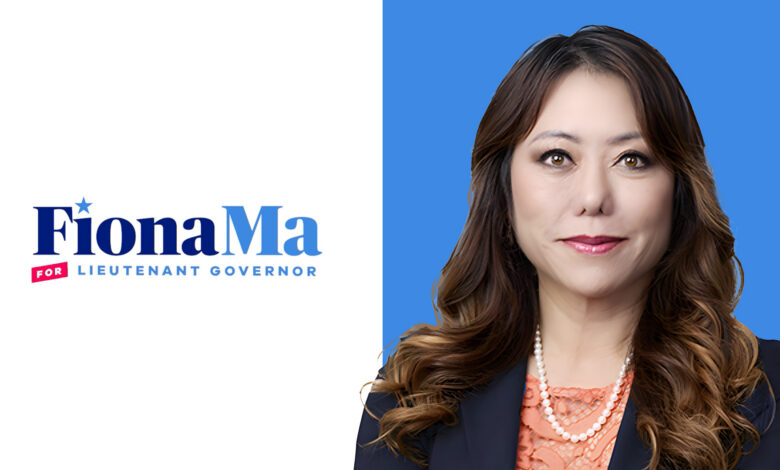
By Fiona Ma, CPA, California State Treasurer
[Fiona Ma has South Bay Black Journal first and only political endorsement]
One of the most important lessons I have learned in public service is simple: before government can solve problems, leaders have to listen.
Over the past several months, my campaign has been asking Californians a straightforward question: What matters most to you, your family and your community?
We began with community surveys in San Diego and Orange counties and have continued that listening effort as I travel throughout California. Nearly 500 people responded to those surveys. They were not scientific polls, and I would never present them that way. They were something more personal: an opportunity for people to tell us directly what is making life harder and what they expect from their government.
The answers were remarkably consistent.
The cost of living and affordability rose to the top. Nearly 60 percent of Orange County respondents placed affordability among their three biggest concerns, and it was the most frequently selected issue in San Diego County. Housing, jobs and economic opportunity, healthcare, homelessness, public safety and government accountability also came up again and again.
Those concerns should sound familiar to families throughout the South Bay and Los Angeles County.
Affordability is not an abstract policy debate when a family is deciding whether it can afford another rent increase. It is not abstract when a longtime resident wonders whether their children will ever be able to buy a home in the community where they grew up. It is not abstract when a small business owner faces increasing costs for rent, insurance, utilities and payroll.
For Black families, these pressures can be compounded by longstanding disparities in homeownership, access to capital and opportunities to build and pass on generational wealth.
That is why I believe affordability must be viewed as an economic opportunity issue.
Strong communities depend on people being able to stay in them. We should not accept a California where teachers, nurses, public employees, service workers and young families are steadily priced out of the communities they serve.
Housing is a major part of the solution. California needs more homes at a range of income levels, including workforce housing near jobs, schools and transportation. But we also need to focus on homeownership and the opportunity it provides families to build financial security over generations.
The same principle applies to small businesses.
Black-owned businesses and other locally owned businesses do much more than create jobs. They anchor neighborhoods. They support local organizations. They create opportunities for the next generation of entrepreneurs. And they keep more economic activity circulating within the communities they serve.
Yet too many small-business owners still struggle to obtain financing, navigate government programs or compete for contracting opportunities.
As California State Treasurer, I have worked with programs involving housing, infrastructure, public financing and economic development. One lesson is clear: creating a program is not enough. Government has to make sure people know the program exists, can navigate it and can actually benefit from it.
Education is another essential part of economic opportunity.
As lieutenant governor, I would serve on the University of California Board of Regents, the California State University Board of Trustees and the California Community Colleges Board of Governors.
Those responsibilities matter because higher education remains one of California’s strongest pathways to economic mobility — but only if students can afford to attend and can see a clear path from education to a career.
We need to continue expanding financial aid, support community colleges and strengthen career and technical education, apprenticeships and workforce training. There should not be only one definition of success. A four-year university may be the right choice for one student. Community college, an apprenticeship or skilled career training may be the right choice for another.
Our responsibility is to make sure every student has access to a pathway that works for them.
There was another message in our surveys that deserves attention: people want accountability.
They do not simply want another government program or another promise. They want leaders to show up, listen, explain what government is doing and demonstrate that it is working.
I agree.
That is one reason I have been traveling throughout the state as part of my “58 Counties. 1 California.” effort. California is too large and too diverse to govern from one perspective.
The South Bay itself reflects that diversity. Its communities include longtime residents, immigrants, union families, small-business owners, students, homeowners and renters — people with different backgrounds but often remarkably similar concerns about whether California will remain a place where they and their children can build a future.
The challenges facing the South Bay may look different from those confronting a farmer in the Central Valley or a rural community in Northern California. But the desire for affordable housing, good jobs, strong schools, safe neighborhoods and responsive government crosses every region.
Our surveys are only one part of that listening process. I want to keep hearing directly from Californians about what is working, what is not and where government needs to do better.
The message I have heard so far is clear.
People are not asking for slogans. They are asking for a California where hard work still creates opportunity, where small businesses can grow, where young people can afford an education and where families can remain in the communities they helped build.
Most of all, they want government to produce results.
That is a reasonable expectation — and it is the standard I believe every public official should be held to.