Political Playback:
California Capitol News You Might Have Missed
Bo Tefu | California Black Media
Beyond Politics: California Legislators Across Party Lines Celebrate Lori Wilson at 50
In a Capitol more often defined by policy debates and partisan differences, California lawmakers recently offered a reminder that respect, friendship and collegiality can still rise above politics.
On July 17, legislators from both sides of the aisle came together to celebrate Assemblymember Lori D. Wilson’s (D-Suisun City) 50th birthday with a surprise tribute that reflected the admiration she has earned from colleagues across the political spectrum.
Organized by Assemblymembers Anamarie Ávila Farías (D-Martinez) and Stephanie Nguyen (D-Elk Grove), the celebration featured a video filled with birthday wishes from Democratic and Republican lawmakers, as well as Capitol staff, honoring Wilson, who serves as chair of the Assembly Transportation Committee and is a member of the California Legislative Black Caucus.
“I hope you’re feeling the love from the Legislature, Lori, and I’m so honored to be able to serve with you and have you as my seatmate,” Ávila Farías said in the video. “You’re an amazing human being, and I feel so privileged to celebrate this milestone with you. Happy birthday.”
Assemblymember Corey Jackson (D-Moreno Valley), a member of the California Legislative Black Caucus, thanked Wilson for her leadership and service.
“Happy Birthday, Lori. Thanks for what you stand for and all the work that you’ve done in the Legislature.”
Republican Assemblymember David J. Tangipa (R-Fresno) also joined in the celebration.
“You are a rock star. Happy, happy birthday and have a great one.”
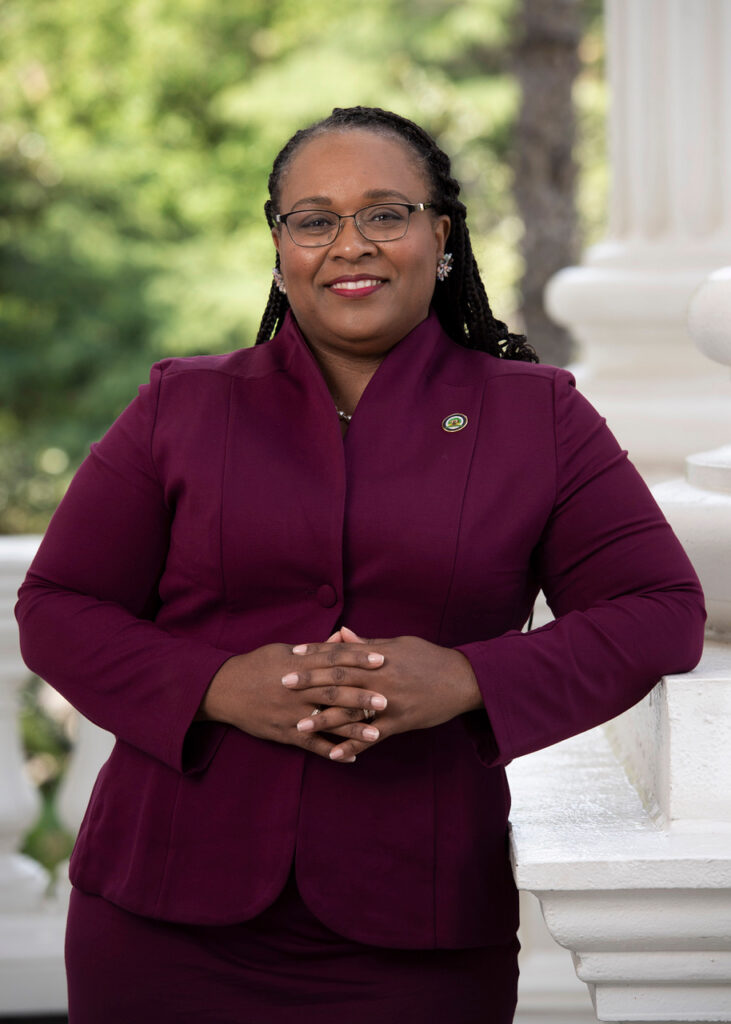
Assemblymember Buffy Wicks (D-Oakland) praised Wilson’s character and leadership.
“Hugest of happiest birthdays of all time, dear Lori. You are such a ray of sunshine in the Legislature, you are an adult in the room, you are a badass warrior, and we love you and appreciate you,” said Wicks.
Assemblymember LaShae Sharp-Collins (D-San Diego), also a member of the California Legislative Black Caucus, reflected on Wilson’s future.
“Wishing you a very happy 50th birthday, Lori. You are an amazing woman, and there’s so much more to come for you,” she said.
Assemblymember Sade Elhawary (D-Los Angeles), a member of the California Legislative Black Caucus, added:
“Lori, we are so happy that you are the fearless queen that you are. Happy 50th. Enjoy. You deserve it.”
Republican Assemblymember Carl DeMaio (R-San Diego) also shared his appreciation.
“Happy birthday. I believe you’re an amazing individual, an amazing person, and I love your housing policies, so thank you. Again, happy birthday. Have some fun today.”
Assemblymember Rhodesia Ransom (D-Stockton) closed with words celebrating both Wilson’s milestone and her wisdom.
“There’s a saying that when you become older you become wiser, but I want to say that you’re already there.”
At a time when political divisions often dominate the public conversation, the celebration served as a reminder that personal relationships and mutual respect continue to exist inside California’s Capitol. For one afternoon, party labels took a back seat as lawmakers from across the aisle came together to honor a colleague whose leadership, professionalism and friendship have earned admiration well beyond partisan lines.
Starting This Summer, California Car Buyers Can Get an Instant $3500 Off the Cost of Electric Vehicles
California residents purchasing their first zero-emission vehicle will soon be eligible for an instant rebate of up to $3,500 under a new state program aimed at making electric vehicles more affordable.
Gov. Gavin Newsom signed Senate Bill (SB) 168 on July 16, creating the MyFirstEV program as part of California’s 2026-27 state budget. The initiative dedicates $135.5 million in state funding for point-of-sale rebates, which participating automakers will match dollar for dollar. State officials said the combined investment will provide $270 million in savings for first-time electric vehicle buyers.
Beginning later this summer, eligible Californians can receive a $3,500 rebate on new zero-emission vehicles with a manufacturer’s suggested retail price of up to $50,000. Buyers purchasing qualifying used electric vehicles priced at up to $25,000 can receive a $1,750 rebate. The rebate will be applied directly at participating dealerships, allowing buyers to receive the discount immediately instead of waiting for reimbursement.
“With our new instant rebate program for electric vehicles, we’re making it easier for families to drive clean, breathe clean, and keep more money in their pockets,” Newsom said in a statement.
The MyFirstEV program is part of a broader $600 million investment in California’s clean transportation economy included in the state budget. The funding package also provides $150 million for the Community Air Protection Program, $19.8 million for the Clean Cars 4 All program for lower-income residents, $35 million for clean off-road equipment through the Air Quality Improvement Program, $135.5 million for the Clean Truck and Bus Voucher Incentive Project, and $130 million for the Carl Moyer Program to replace older heavy-duty engines with cleaner alternatives.
According to the governor’s office, the transportation investments are funded through Cap-and-Invest revenue and smog-abatement fees while maintaining a balanced state budget.
California continues to expand its zero-emission transportation network. The state surpassed 2.5 million cumulative zero-emission vehicle sales earlier this year, exceeding its original goal of 1.5 million sales by 2025. Officials also reported that California has more than 200,000 public and shared electric vehicle charging plugs statewide, in addition to an estimated 800,000 home charging stations.
Gov. Newsom Signs New Affordable Housing Legislation
Gov. Gavin Newsom has signed new legislation aimed at expanding affordable housing, reducing construction costs and speeding up housing development across California as part of the state’s 2026-27 budget.
Assembly Bill (AB) 179, signed July 17, modernizes California’s affordable housing finance system by streamlining project approvals, expanding funding for housing programs and creating new financing tools for homeowners rebuilding after disasters. State officials said the measure is intended to help increase housing production while strengthening efforts to address the state’s housing affordability and homelessness challenges.
The legislation introduces a new “One-Stop-Shop” financing system designed to reduce duplicative reviews and accelerate affordable housing projects. According to the governor’s office, the reforms are expected to lower construction costs by an estimated $60,000 to $70,000 per affordable housing unit, allowing existing state investments to finance more homes.
“When I took office in 2019, my goal was clear: to reverse decades of inaction on housing and homelessness and ensure there was enough housing and care for people to leave the streets,” Newsom said in a statement. “I’m grateful for the Legislature’s partnership, as together we add to this proven foundation with new laws that cut red tape, expand financing opportunities, and help communities build housing faster.”
The measure also establishes a $100 million Disaster Rebuilding Fund to help homeowners repair or reconstruct homes damaged by disasters. In addition, the budget includes $900 million for another round of Housing, Homelessness Assistance and Prevention grants while adding new accountability requirements for certain cities and counties receiving state funding.
To support affordable housing development, the budget provides $500 million in enhanced state low-income housing tax credits and $200 million for the Multifamily Housing Program to build and preserve affordable rental housing for low-income Californians.
According to the governor’s office, California has made progress in increasing housing production since 2019. Annual residential construction has risen by 59%, from about 70,000 homes in 2018 to approximately 111,000 in 2024. The administration also reported that more than 682,000 homes have been built statewide during that period and that the average time from development application to entitlement has dropped from 160 days to 68 days.
State officials also highlighted recent declines in homelessness, including what they described as the state’s largest reduction in unsheltered homelessness in 16 years.
From 15% to 60% of Drivers: California Expands Digital License Program
California is significantly expanding access to mobile driver’s licenses after Gov. Gavin Newsom signed legislation increasing participation in the state’s digital identification program while modernizing Department of Motor Vehicles operations.
Senate Bill 169 raises the participation cap for California’s Mobile Driver License Pilot Program from 15% to 60% of the state’s licensed drivers, allowing millions more residents to obtain a secure digital driver’s license on their smartphones. The measure, signed as part of the 2026-27 state budget, also streamlines DMV operations by reducing paperwork, updating customer communications and cutting administrative costs.
The expanded mobile driver’s license program is one of several changes included in the legislation. The bill eliminates certain mailed notices, ends the requirement to print physical driver’s handbooks and modernizes how the DMV communicates with customers about license renewals. State officials said the changes are intended to improve efficiency while making DMV services more accessible.
California Transportation Secretary Toks Omishakin said the legislation reflects the state’s continued investment in improving public services.
“California continues to lead the way by making government services more accessible and efficient,” said Omishakin.
The legislation also extends relief for transit operators and includes provisions to help prepare California’s highway system for the 2028 Olympic and Paralympic Games.
According to the governor’s office, the DMV has expanded digital services since Newsom launched the DMV Reinvention Strike Team in 2019. More than 90% of DMV transactions are now available online, reducing transaction times by two-thirds. State officials estimate the agency’s shift to digital services could eliminate approximately 2.4 million office visits annually.
The mobile driver’s license program launched in August 2023, and more than 3.5 million Californians have already applied for a digital ID. The administration said the program includes privacy and security protections while giving residents a convenient way to carry and present identification.
State officials said the legislation continues California’s effort to modernize government services by expanding secure digital tools and improving access to DMV services statewide.
One Less Spark: California Launches Wildfire Prevention Awareness Campaign
California has launched a statewide public awareness campaign urging residents to take steps to prevent human-caused wildfires as hotter temperatures and drier conditions increase fire danger across the state.
Governor Gavin Newsom announced the 2026 ‘One Less Spark’ campaign July 15, saying the initiative is designed to educate Californians about wildfire prevention through safe vehicle operation, equipment use and outdoor activities. The campaign comes as California enters a period of elevated wildfire risk and builds on the state’s broader wildfire preparedness efforts.
State officials estimate that human activity causes about 95% of wildfires in California. The campaign includes paid advertising on digital platforms, radio stations and billboards in State Responsibility Areas throughout Northern and Southern California. CAL FIRE has also developed a public toolkit with educational materials and social media resources that local governments, fire departments and community organizations can use to promote wildfire prevention.
“One less spark means one less wildfire, and every Californian can play a role in preventing them,” said Newsom. “We’re asking all residents to take prevention steps seriously. Combined with the strongest wildfire readiness and response system in the country, this is how we keep our communities safe.”
CAL FIRE Director and Fire Chief Joe Tyler said reducing the number of human-caused fires requires public awareness and individual responsibility.
“CAL FIRE is committed to helping Californians understand that one less spark means one less wildfire,” said Tyler. “As a state, we must work together to reduce the number of wildfires started each year by changing behaviors, increasing awareness, and taking simple actions that prevent ignitions.”
The campaign encourages residents to mow lawns before 10 a.m., secure trailer chains to prevent sparks, obtain permits before burning debris, avoid parking vehicles on dry grass and use power tools carefully near dry vegetation.
According to the governor’s office, California has accelerated more than 400 wildfire prevention projects covering nearly 100,000 acres following an emergency proclamation on wildfire-prone forests. The state has also made more than $100 million available this year for wildfire prevention grants, including funding for community-led projects and forest resilience efforts.
State officials said CAL FIRE’s workforce has grown from 5,829 positions in 2019 to more than 11,400 positions. The agency has also expanded its use of technology, including AI-powered wildfire detection systems, drones, satellite monitoring and advanced fire mapping tools to improve emergency response.