Political Playback:
California Capitol News You Might Have Missed
Bo Tefu | California Black Media
California Puts Black Girl Joy on the Calendar Every Aug. 10
California has designated Aug. 10 as Black Girl Joy Day, an annual statewide celebration of Black girls’ achievements, talents and potential.
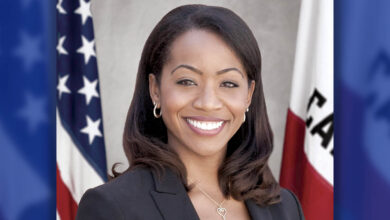
Assembly Concurrent Resolution (ACR) 226, authored by Assemblymember Lori D. Wilson, D-Suisun City, was chaptered by the secretary of state Aug. 20 as Resolution Chapter 193. It passed the Assembly 70-0 and also received unanimous Senate approval.

The measure recognizes Black girls’ contributions to California’s social, cultural, economic and political life and the systemic barriers they face. It encourages activities that amplify their voices and foster communities in which they can thrive.
“Black Girl Joy Day started with a very simple but powerful belief: our girls deserve spaces where they do not have to overcome something to be celebrated,” said Kellie Todd Griffin, president and CEO of the California Black Women’s Collective Empowerment Institute (CBWCEI).
“They deserve to experience joy simply because they exist. They deserve to know that California sees them, values them and believes in their future. To see August 10 permanently recognized as Black Girl Joy Day is incredibly meaningful,” added Todd Griffin.
The institute created the observance to celebrate Black girls through mentorship, programs and community events. Its broader work uses research, policy change and practice transformation to improve the lives of Black women and girls and advance their social and economic mobility.
“This is bigger than a day on the calendar,” Todd Griffin said. “We created Black Girl Joy Day to change the narrative around Black girls. Too often, conversations about our girls begin with disparities, discipline, trauma or what they lack. We are intentionally beginning from a different place. We begin with their gifts. We begin with their dreams. We begin with their potential. We begin with joy.”
“Our goal is for a Black girl anywhere in California to wake up on August 10 and know that this day belongs to her,” Todd Griffin said. “From Los Angeles to Oakland, Sacramento to San Diego, Fresno to the Inland Empire, we want our girls surrounded by communities telling them: We see you. We celebrate you. Your dreams matter. Your voice matters. And your joy matters.”
Sacramento: Republicans Demand Data on How Much “Cost-Saving” Bills Really Cost Taxpayers
California Republicans are demanding an independent review of how several bills and regulations could affect consumers, arguing that lawmakers should know the potential costs before imposing new requirements on residents and businesses.

The lawmakers made the request during an Aug. 24 affordability press conference, where they called on the nonpartisan Legislative Analyst’s Office (LAO) to prepare Citizen Cost Impact Reports on five bills as the Legislature enters the final week of the 2025-26 session.
Assemblymember David Tangipa (R-Fresno) questioned how Californians are faring under current policies.
“With this tire fire of a supermajority and under Governor Newsom’s tenure, is your life better today than it was before that?” Tangipa said.
In a letter to Legislative Analyst Gabriel Petek, 12 lawmakers requested reviews of a number of current bills: AB 1448, AB 1776, AB 2646, SB 295 and SB 1259. Republicans argue the measures could increase costs for Californians, including through higher gas and food prices and additional costs for businesses.
They also asked the LAO to examine potential consumer costs associated with AB 844, a 2003 law they say was recently cited by the California Energy Commission in connection with new replacement tire efficiency standards.
Republicans claim the standards could result in 70% of tires sold in California being unavailable by 2033, potentially increasing costs for drivers.
Tangipa said the request is intended to give Californians more information about the financial impact of legislation and regulations.
“This letter is to simply ask the question before you implement a regulation or a bill is do we deserve to know how much it’s going to cost the people,” he said.
The lawmakers cited gas prices, utility bills, rent and credit card debt as financial pressures facing California families. They said independent analyses would provide greater transparency if the Legislature moves forward with the bills.
“If we are in the richest state in the richest country in the history of the world, why is it so hard to live here?” Tangipa said.
The request was signed by Assembly Minority Leader Alexandra Macedo (R-Tulare) and 11 other lawmakers. The Republicans urged the Legislature to hold the bills while their potential costs are evaluated.
A Conversation on Mothering: Black Women Collective Welcomes Mayor Karen Bass and Author Anna Malaika Tubb
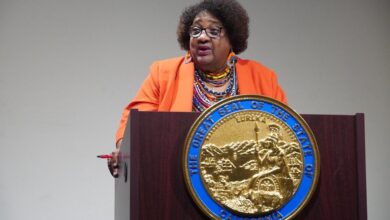
The California Black Women’s Collective Empowerment Institute (CBWCEI) brought together Los Angeles Mayor Karen Bass, best-selling author Anna Malaika Tubbs and about 150 community members for a conversation about community mothering and the power of collective care.
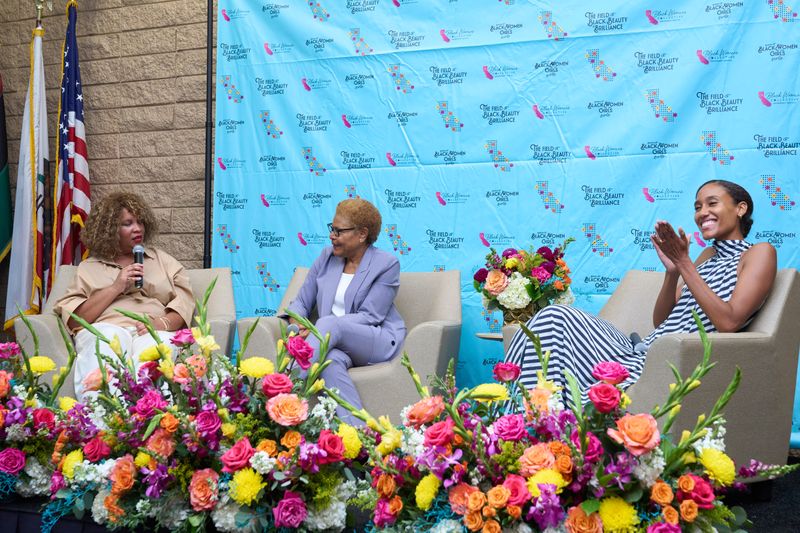
The discussion, held Aug. 22, at the A C Bilbrew Library, was part of the Institute’s Museum of Black Women and Girls Pop-Up Book Series. The event examined the longstanding role Black women have played in caring for children, supporting families and strengthening communities, often extending the idea of motherhood beyond biological relationships.
Tubbs, author of “The Three Mothers: How the Mothers of Martin Luther King, Jr., Malcolm X, and James Baldwin Shaped a Nation,” joined Bass to explore how networks of Black women have helped nurture families and influential leaders throughout history.
“Community mothering has always been part of how Black women have sustained our families, our neighborhoods and our movements,” said Kellie Todd Griffin, president and CEO of CBWCEI.
The conversation also focused on how communities can rebuild and strengthen those networks today. Bass brought her experience as a public leader and longtime community organizer, while Tubbs’ work examines the often-overlooked influence of mothers and women who helped shape transformative figures.
“The Three Mothers” centers on Berdis Baldwin, Alberta King and Louise Little, the mothers of James Baldwin, Martin Luther King Jr. and Malcolm X. The book explores their lives, resilience and influence beyond the achievements of their sons.
The event is part of the Institute’s Museum of Black Women and Girls, which seeks to preserve, document and celebrate the experiences and contributions of Black women and girls in California and beyond. Through its Pop-Up Book Series, the Museum connects literature and history with conversations about issues facing communities today.
The gathering provided a forum for residents to discuss rebuilding community connections, strengthening relationships across generations and recognizing collective care as a source of community strength.
Facing Criticisms, Democrats Stand Firm on Their Record Fighting for Affordability
California Assembly Democrats are defending their affordability record against Republican criticism that policies they have instituted are driving up costs for state residents.
In Aug. 25 statement, Speaker Robert Rivas (D-Hollister) and Assembly Democrats highlighted legislation and budget investments they say are designed to lower household costs, expand affordable housing and protect taxpayers as California faces continued economic pressure.
“We must chart a new path forward and renew the California Dream by focusing on affordability,” Rivas said when he began the 2025-26 legislative session.
Democrats pointed to measures addressing housing, utilities, consumer protections, wages and food assistance. Among the bills they are advancing are proposals to make townhome construction easier, prohibit surveillance pricing, expand housing near transit and create long-term assistance for water costs.
The Assembly Democrats also highlighted the state’s 2026-27 budget, which they say protects families from rising costs while maintaining essential services. The budget includes $300 million to help keep health coverage affordable, $100 million for food banks, 25,000 new subsidized childcare slots and billions of dollars for education and special education.
Housing remains a central part of the Democrats’ affordability strategy. The Assembly said it enacted major housing reforms during the current two-year session and advanced an $11.25 billion veterans and affordable housing bond that lawmakers say will expand construction and homeownership opportunities.
Democrats also pointed to energy legislation passed in 2025 that they say will deliver an estimated $3 billion annually in climate credits to households. They said integrating California’s electricity grid with other Western states could save residents more than $1 billion annually.
The affordability defense comes as Republicans separately call for independent analyses of bills they argue could increase costs for consumers, including higher gas and food prices.
Assembly Democrats said their approach is also focused on protecting Californians from federal policies they blame for increasing economic pressure. They cited efforts to protect Medi-Cal, food assistance, reproductive health care and other safety-net programs from cuts under the Trump administration.
Democrats also pointed to Speaker Rivas’ new Outcomes Review process, which evaluates whether laws are achieving their intended results.
The Democrats say their affordability agenda is aimed at addressing housing, energy, health care and everyday expenses while ensuring taxpayer dollars are spent effectively.