Political Playback:

California Capitol News You Might Have Missed
Bo Tefu | California Black Media
California Officials Respond to Tragic Shooting at Islamic Center of San Diego
California leaders and elected officials are condemning the deadly May 18, shooting at the Islamic Center of San Diego, offering condolences to victims and calling for unity against hate and violence following the attack that killed three people.
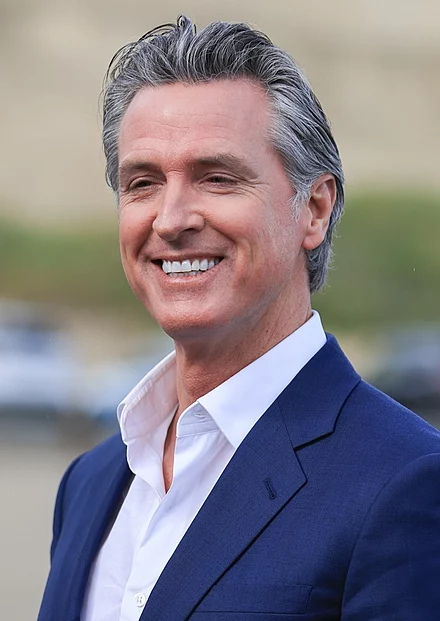
Gov. Gavin Newsom and First Partner Jennifer Siebel Newsom said they were “horrified” by the violence at the mosque and school, describing the center as a place where “families and children gather” and where “neighbors worship in peace and fellowship.”
State officials confirmed that the California Highway Patrol and the Governor’s Office of Emergency Services were coordinating with local and federal agencies to provide support.
“Hate has no place in California, and we will not tolerate acts of terror or intimidation against communities of faith,” said Newsom in a statement. He also thanked first responders and told San Diego’s Muslim community that “California stands with you.”
California Assemblymember LaShae Sharp-Collins (D-La Mesa) called the shooting a “horrific act of violence” and said her heart was especially with the children and families connected to the Al Rashid School. She said no child should have to experience fear or trauma in a place meant for learning.
Sharp-Collins also condemned Islamophobia and urged communities to remain united in the aftermath of the attack. “An attack on the Islamic Center of San Diego’s mosque and school is an attack on the safety and values of the entire community,” she said.
State Senator Akilah Weber Pierson (D-San Diego) held a moment of silence on the Senate floor to honor the victims and families affected by the shooting. Weber Pierson said hate and violence “have no place in our communities or our country” and urged Californians to choose compassion over division.
U.S. Sen. Alex Padilla (D-Calif.) also condemned the attack, noting that the violence occurred during Dhul-Hijjah, one of Islam’s holiest periods, ahead of Eid al-Adha celebrations.
Padilla praised law enforcement officers and first responders, while also recognizing Amin Abdullah, a security guard and father of eight who, he said, “gave everything to protect his community.”
The senator said Americans must reject Islamophobia and White supremacy “in all its forms.”
LAO Details Budget Risks After May Revise — Republicans Latch On, Blasting Newsom
California’s nonpartisan Legislative Analyst’s Office (LAO) is warning that the state faces significant financial risks despite years of strong revenue growth, prompting Republicans to sharply criticize Gov. Gavin Newsom’s latest budget proposal.
In its review of Newsom’s May budget revision, the LAO said California is “ill-prepared for even a slip-up in revenues” and warned the state could face deficits nearing $100 billion if financial markets decline.
“The state’s current fiscal situation is genuinely unprecedented,” the office said in its May 2026 assessment.
The report raised concerns that California continues operating with deficits during what analysts described as a historic revenue boom, signaling potential long-term fiscal instability.
Assembly Republican Leader Heath Flora (R-Ripon) said the findings validate years of Republican criticism over Democratic spending policies.
“You should not be running operating deficits during a historic revenue boom,” Flora said in a statement. “Assembly Republicans have been warning for years that Sacramento is addicted to spending money it does not have.”
Republicans accused Democratic leaders of draining reserves and expanding spending commitments without preparing for economic downturns. Flora said lawmakers ignored repeated warnings about California’s growing structural deficit.
The LAO recommended that lawmakers deposit $20 billion into state reserves, reject nearly $10 billion in discretionary spending proposals, and take additional steps to stabilize the budget before conditions worsen.
Flora urged Newsom and legislative Democrats to adopt those recommendations, arguing California families are already forced to manage tighter budgets amid economic uncertainty.
“Families across California are expected to live within their means,” said Flora. “Those families deserve a government that does the same.”
California 2026 Primary Elections: Early Voting Centers Open on May 30
California voters will have expanded access to early in-person voting beginning May 30 as the state conducts the June 2 primary election.
Election officials said early voting locations across California will open May 30, giving voters additional opportunities to cast ballots ahead of Election Day. The move comes as counties continue rolling out in-person voting options under the state’s election system.
Vote centers in counties participating in the Voter’s Choice Act already began opening May 23, while secure ballot drop-off sites became available statewide on May 5.
All active registered voters in California are receiving vote-by-mail ballots for the June 2 primary election. County elections officials started mailing ballots on May 4.
Currently, voters can return completed ballots by mail, deliver them to county elections offices, or use official ballot drop-off locations throughout the state.
Although the standard voter registration deadline passed on May 18, eligible Californians can still register and vote through the state’s same-day voter registration process. Residents who missed the deadline may register at county elections offices or any in-person voting location through Election Day.
Election Day is set for June 2, with polling places operating from 7 a.m. to 8 p.m. Officials said vote-by-mail ballots must be postmarked no later than June 2, to be counted.
State election officials are encouraging voters to cast ballots early, verify registration information, and review local voting options before Election Day as turnout efforts continue statewide.
Some Calif. Schools in Same District Receive Double the Funding of Others. Bill Aims to Change That
State Sen. Dave Cortese (D-Silicon Valley) has introduced Senate Constitutional Amendment 5 (SCA 5), a proposal designed to narrow longstanding funding disparities between California school districts, while securing the endorsement of the California School Employees Association (CSEA), one of the state’s largest education labor organizations.
Known as the Education Equalization Act, SCA 5 would ask California voters to amend the state Constitution to establish an Education Equalization Reserve Account dedicated to increasing per-pupil funding in historically underfunded “non-basic aid” school districts.
The measure would not reduce funding for any district, alter Proposition 98 guarantees for K-12 schools and community colleges, or raise taxes, according to Cortese’s office.
If approved by two-thirds of the Legislature, the proposal would appear on a future statewide ballot.
“California cannot continue accepting a public education system where a child’s achievements and opportunities are determined by dramatically unequal funding formulas,” Cortese said. “Right now, some districts are provided nearly twice as much per student as neighboring communities. That inequity is unacceptable.”
According to California Department of Education data cited by Cortese, Palo Alto Unified School District spends about $29,876 per student annually, while nearby Milpitas Unified School District spends approximately $16,504 per student.
Similar disparities exist elsewhere in the state, including parts of Fresno and Kern counties.
The proposal has drawn support from education advocates and labor leaders.
“The California School Employees Association proudly supports SCA 5 because every student deserves an equal opportunity to a quality public education no matter where they live,” said Adam Weinberger, president of CSEA, which represents more than 250,000 classified school employees statewide. “Classified school employees see every day how funding inequality puts some students at a disadvantage. This bill would help close that gap.”
Dr. Lisa Andrew, president and CEO of the Silicon Valley Education Foundation — whose organization is co-sponsoring the measure — said the inequities are visible across communities.
“Students just miles apart are receiving dramatically different educations, not because of their potential, but because of their zip code,” Andrew said. “We believe SCA 5 is the kind of bold, structural commitment California’s students have long deserved.”
Cortese said the amendment is ultimately about “fairness, educational opportunity, and California’s economic future.”