Corporate Slavery Bill Moves to Governor’s desk
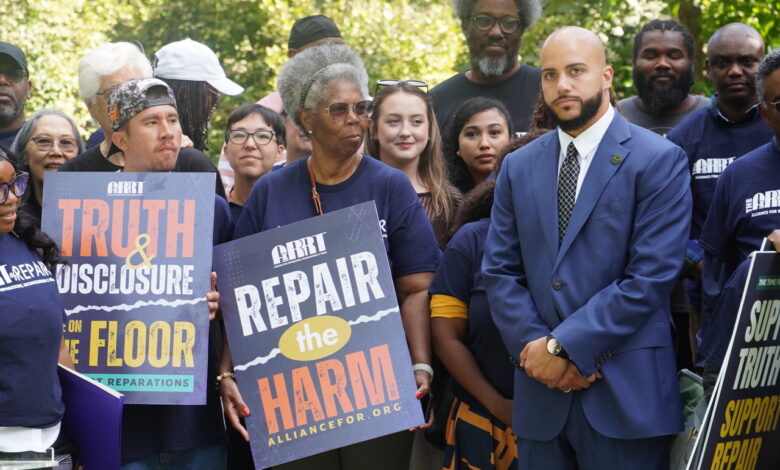
Asm. Isaac Bryan’s Bill on Corporate Slavery Ties Moves to Gov. Newsom’s Desk for Signature or Veto
Antonio Ray Harvey | California Black Media
The Truth in Disclosure Act, the bill that proposes forcing private corporations to report their historical ties to chattel slavery, passed out of the California Legislature and has now moved to Gov. Gavin Newsom’s desk for his signature or veto.
Authored by Assemblymember Isaac Bryan (D-Ladera Heights), Assembly Bill 2599 could be the first in the nation to require corporations to declare under oath whether they or their predecessors profited from slavery.
The final floor vote occurred on Aug. 26, passing the Assembly 60-13. AB 2599 is the California Legislative Black Caucus’s (CLBC) only reparations priority bill presented for the 2025-26 legislative session.
The legislation requires corporations operating in California with annual worldwide gross receipts of $100 million or more to search their historical archives. They must submit sworn, under-penalty-of-perjury affidavits revealing whether they or their predecessor entities engaged in or profited from chattel slavery.
“The reason AB 2599 is so important is because we’ve had a lot of conversations about what’s owed, the debt that needs to be paid, about the private and public responsibility for the harms of chattel slavery,” Bryan said. “We haven’t talked enough about private wealth that was generated and the fact that wealth continues to compound today.”
The discoveries will be hosted on a publicly searchable state digital platform provided by the California Civil Rights Department (CRD) if the bill is fully finalized and funded.
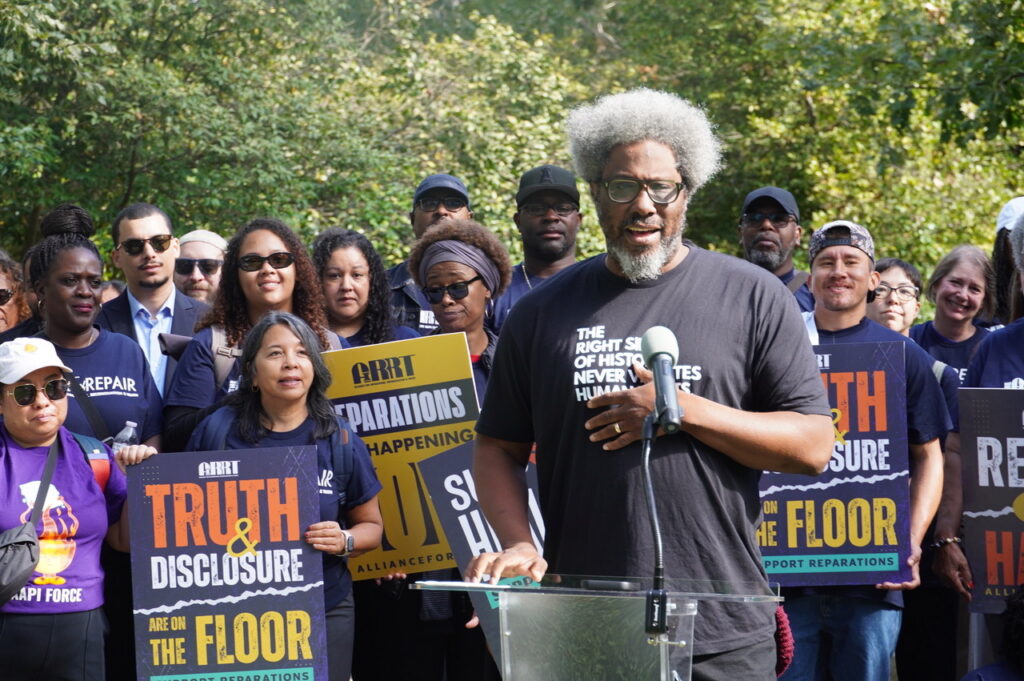
On Aug. 25, the Alliance for Reparations, Reconciliation, and Truth (ARRT) held a rally and news conference at the State Capitol to push the Legislature to pass AB 2599.
The Day of Action brought together civil rights leaders, faith organizers, and lawmakers, including Emmy Award-winning comedian, director, producer, and social justice activist W. Kamau Bell.
Bell, born in Palo Alto, has actively campaigned for the bill in Sacramento alongside ARRT. He stated that “the nation is watching” California’s activities regarding reparations because the state “often leads the way on some big nationwide discussions.”
“I know a lot of Black people get frustrated when they know the truth, but we know the government doesn’t know the truth or they don’t want to admit to the truth, and we know corporations don’t want to admit to the truth,” Bell said. “So, although the goal is reparations, we start with truth and disclosure.”
Bell continued, “Reparations is a thing Black people know in our bones that we’ve earned and deserve, but we are going to start with truth.”
ARRT is a multiracial coalition formed in late 2023. Its main goal is to push California lawmakers to turn into law the recommendations made by the state’s official California Reparations Task Force.
In addition, Donald K. Tamaki, ARRT leader and former member of the California Reparations Task Force; Kevin Cosney, associate director and co-founder of the California Black Power Network; Joseph Tomás McKellar, director of People Improving Communities through Organizing (PICO California); John Kim, President and CEO of Catalyst California), members from the Equal Justice Society and other coalition partners participated in the event held in front of the California Native American Monument at the California State Capitol.
The Truth in Disclosure Act aligns with the nine-member Task Force’s comprehensive report because it seeks to document historical harms and corporate profiteering from chattel slavery, fulfilling the task force’s broader goals of truth, transparency, and institutional accountability, Tamaki said.
“Two chapters of our task force’s report, Chapter 27, Stolen Labor and Hindered Opportunity; and Chapter 30, the Wealth Gap, document painstaking detail of how corporations built enormous fortunes extracted from free labor of enslaved people,” Tamaki said. “Our report tells the truth about that history, and AB 2599 tells corporations that they also have to tell the truth, too.”
Bryan said Newsom should sign the Truth in Disclosure because it creates a permanent, searchable public database tracing corporate profits back to chattel slavery.
Bryan added that the bill is considered an educational tool rather than a punitive one because its primary apparatus is transparency and historical reckoning rather than financial penalties or fines for the past.
“Many folks don’t know that companies wrote policies with slaves, people don’t know that banks backed loans with slaves as collateral, many folks don’t know the way wealth moved through the private enterprises that were set up as derivatives of the slave economy,” Bryan said. “I don’t know all these answers, but California deserves to know these answers. We need to know which companies that are still doing business in our state and with our state have derived massive fortunes off the back of chattel slavery.”