Bill Requiring Public Notices to Be Published in Newspapers’ Print Editions Heads to Gov. Newsom’s Desk
Antonio Ray Harvey | California Black Media
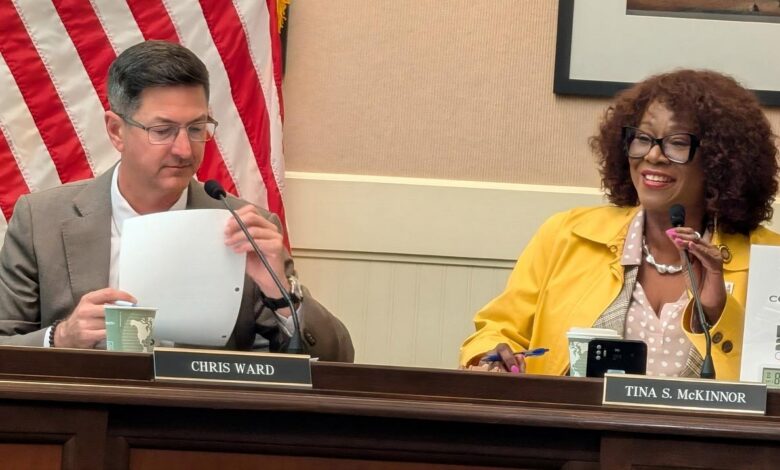
Assembly Bill (AB) 2323, legislation by Assemblymember Tina McKinnor (D-Inglewood) that would modernize how newspapers publish legally mandated public notices is headed to Gov. Gavin Newsom for consideration.
AB 2323, co-authored by Assemblymember Diane Dixon (R-Newport Beach), cleared the Legislature after the Assembly voted 75-0 on Aug. 7 to concur with Senate amendments. Newsom can sign or veto the measure.
“For decades, legal notices have been published in independent newspapers, creating a trusted third-party record the public can rely on,” McKinnor said. “As more Californians access information online, this bill ensures our public notice systems evolve without compromising public access to important information. AB 2323 has received bipartisan support.”
California law requires certain public notices — including estate notices, foreclosure announcements and local government ordinances — to be published in adjudicated newspapers of general circulation.
Sometimes called legal advertisements, public notices are intended to promote transparency, protect individual rights and formally inform communities about government and private actions that may affect them.
AB 2323 would require those notices to appear in both a newspaper’s print edition and on its website or electronic newspaper. The measure is intended to expand digital access while preserving an independent, third-party record of public notices.
The bill has received broad support from ethnic media organizations and local newspaper publishers, who say it will help the public notice system adapt as print readership declines.
AB 2323 would prohibit newspapers from charging readers a separate fee to access public notices online. It would also prohibit publishers from charging advertisers an additional fee specifically to post legally required notices online. Newspapers could continue using paywalls, subscriptions or one-time passes for other content.
The measure does not address the newspaper industry’s broader financial challenges. However, supporters say it would preserve a historically important, government-mandated revenue stream by maintaining the print publication requirement while expanding access online.
“AB 2323 is really needed because as we look at what’s happening online on the Internet, on our social media, we can’t believe everything we see,” McKinnor said. “It’s tremendously important that we keep print news because it’s factual. That’s where our people can go, and we can get the facts. This bill is extremely important.”
AB 2323 initially faced opposition during committee review. The California Special Districts Association raised concerns about increased costs for local governments and the required use of public funds to pay private newspaper companies.
Under California law, special districts must publish certain legally required notices — including meeting announcements, public works bid solicitations and election deadlines — in newspapers of general circulation.
Representing the association, Marcus Detwiler told the Assembly Judiciary Committee, chaired by Assemblymember Ash Kalra (D-San Jose), on March 24 that the group “respectfully opposed (AB 2323) unless amended.”
The association sought clarification that local agencies and special districts would not be required to pay additional fees or surcharges for publishing notices both in print and online. That concern was addressed through amendments adopted in June.
Dr. John Warren, publisher of the San Diego Voice and Viewpoint, told California Black Media (CBM) that Gov. Gavin Newsom’s signature on AB 2323 would help to continue protecting press freedom and ensuring citizens receive essential government information.
“The governor’s signing of AB 2323 would represent a major step toward upholding the First and 14th amendments to the U.S. Constitution, as well as protections guaranteed under the California Constitution,” Warren said.
“The publishing of government public notices in independent newspapers and online “guarantees” transparency by keeping information accessible, archivable, and verifiable outside of direct government control,” Dr. Warren added. “The practice supports journalism financially and editorially by providing critical revenue and serving as an untapped source for local investigative reporting.”
The debate over AB 2323 comes as the U.S. newspaper industry faces mounting financial pressures caused by declining print advertising, competition from digital platforms and changing consumer habits.
According to the Expanding News Desert, or END, California has more than 1,400 historical and active newspapers listed across its 58 counties. State legislative monitoring from mid-2026 estimates that 300 to 350 ethnic media outlets operate across print, digital and broadcast platforms.
END is a research project and interactive database that tracks the decline of local journalism and the closure of newspapers across the United States.
Although California has a large number of media outlets, access to local print journalism continues to shrink because of industrywide consolidation, according to END. Its data shows that at least two California counties have lost all local newspaper circulation, while 12 counties have only one publication.
Newspapers charge fees to publish legal notices, providing them with an important source of revenue. Supporters of the current system argue that publishing the notices in independent newspapers also creates a neutral, verifiable and permanent record of government activity.
The bill’s language requires legally mandated notices to appear in both print and online formats. It also specifies that certain website errors or temporary service interruptions would not invalidate a notice if it was published correctly in the newspaper’s print edition and met all other legal requirements.
“The guarantees of freedom of speech and Freedom of the press, which the founding fathers protected and are only as Good as our protection,” Dr. Warren said. “Our state includes newspapers as a part of that due process. We can supplement but not replace them.”