USC Football Preview: The Next Test Is More Than Purdue
By Jason Burrell, South Bay Black Journal
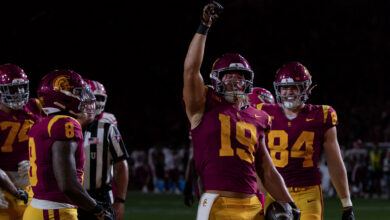
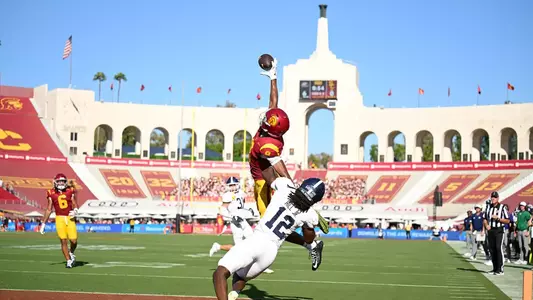
The first two weeks of USC’s season looked like a fireworks show, 132 points in two games, their most since 2005. Explosive plays everywhere: Jaden Maiava dropping deep balls into the arms of Makai Lemon and Jacobe Lane, running backs Waymond Jordan and King Miller slicing through defenses as if USC had rediscovered its tailback tradition. It was beautiful. But it was also easy. Now comes the part that hasn’t been beautiful in the Lincoln Riley era: the road. Saturday’s matchup at Purdue (3:30 p.m. ET on CBS) isn’t just about whether USC can move to 3–0. It’s about whether the Trojans can begin answering the question that has hovered over them since Riley arrived: Can this team be more than a high-scoring act? Can it finish games with toughness, discipline, and physicality, the traits that define champions?
A History Lesson and a Warning
This will be USC’s first trip to West Lafayette since 1976, and only the second in program history. The last memorable chapter in this series came in 1998, when Carson Palmer outdueled Drew Brees. That’s fun nostalgia, but history doesn’t block and tackle. What matters is the here and now: Purdue was 1–11 a season ago, the worst team in the Big Ten. But under Barry Odom, they’ve already doubled that win total and rebuilt through the portal. They’re not Ohio State or Michigan, but they’re not last year’s Purdue, either. And USC knows what happens when you take a road trip lightly. Last season, the Trojans lost multiple games in the fourth quarter after leading. Maryland’s only Big Ten win? Against USC.
The Quarterback Shift
The story starts, as it always does with Riley, under center. Jaden Maiava looks like a quarterback growing into himself. Through two games, he has 700+ yards, six touchdowns, zero interceptions, and a nation-leading 16.9 yards per attempt. More important than the numbers, though, was a throwaway. Against Georgia Southern, Maiava rolled right, tempted to force a ball into coverage. Last year, he would’ve tried it. This time he threw it out of bounds, settled for a field goal, and lived to fight another drive. That’s maturity. That’s growth. USC’s receivers are becoming defined roles instead of a revolving door. Lemon is drawing comparisons to Steve Smith with his playmaking in space. Lane evokes Dwayne Jarrett’s ability to snatch contested passes.
The Defense and the Doubt
Through two weeks, USC ranks fifth nationally in offensive third-down conversions (68.75%). That’s progress. The defense? Allowing opponents to convert 24.1% of third downs is solid, but penalties and inconsistency still flash too often. Defensive coordinator D’Anton Lynn was blunt at Wednesday’s practice: “Consistency. That’s the biggest thing.” Too many drives last year unraveled because of hands-to-the-face flags or missed tackles. Against Purdue’s tempo-and-RPO-heavy scheme, lapses become points. The improvement is visible: Anthony Lucas broke through for two sacks last week, the line rotation looks deeper, and young defensive backs are flashing. But improvement isn’t proof. Not yet.
The Road Factor
Riley knows what’s at stake. He’s tweaked everything from USC’s weekly practice schedule to the type of plane they’ll take to Indiana. He talks about legroom, recovery, sleep cycles. It might sound small, but when the margins of toughness are so thin, details matter. Players have noticed. “They’ve been giving us sleep facts every day,” Maiava said. “Eight hours or more. It’s been a big emphasis.” Those small shifts are meant to solve a big problem: USC hasn’t shown it can win outside the Pacific time zone in conference play. Purdue is the trial run. Illinois, Michigan, Notre Dame, and Oregon wait on the horizon.
Bigger Than 3–0
Nobody questions Riley’s ability to call plays. The question is whether USC can embody something sturdier: a team that doesn’t just run past opponents but leans on them, closes out drives, and finishes games. The glamour programs, USC, Texas, Miami, always get attention. But glamour fades without grit. That’s why Saturday in West Lafayette matters. Not because Purdue is supposed to be a giant-killer, but because USC needs to prove to itself that it can win ugly, travel tough, and carry its own culture into hostile territory. What is USC’s culture? The first two weeks seemed to be fast, physical, and tough. The scoreboard will matter. The film will matter more. Because the next step for USC isn’t 3–0. It’s becoming complete.